
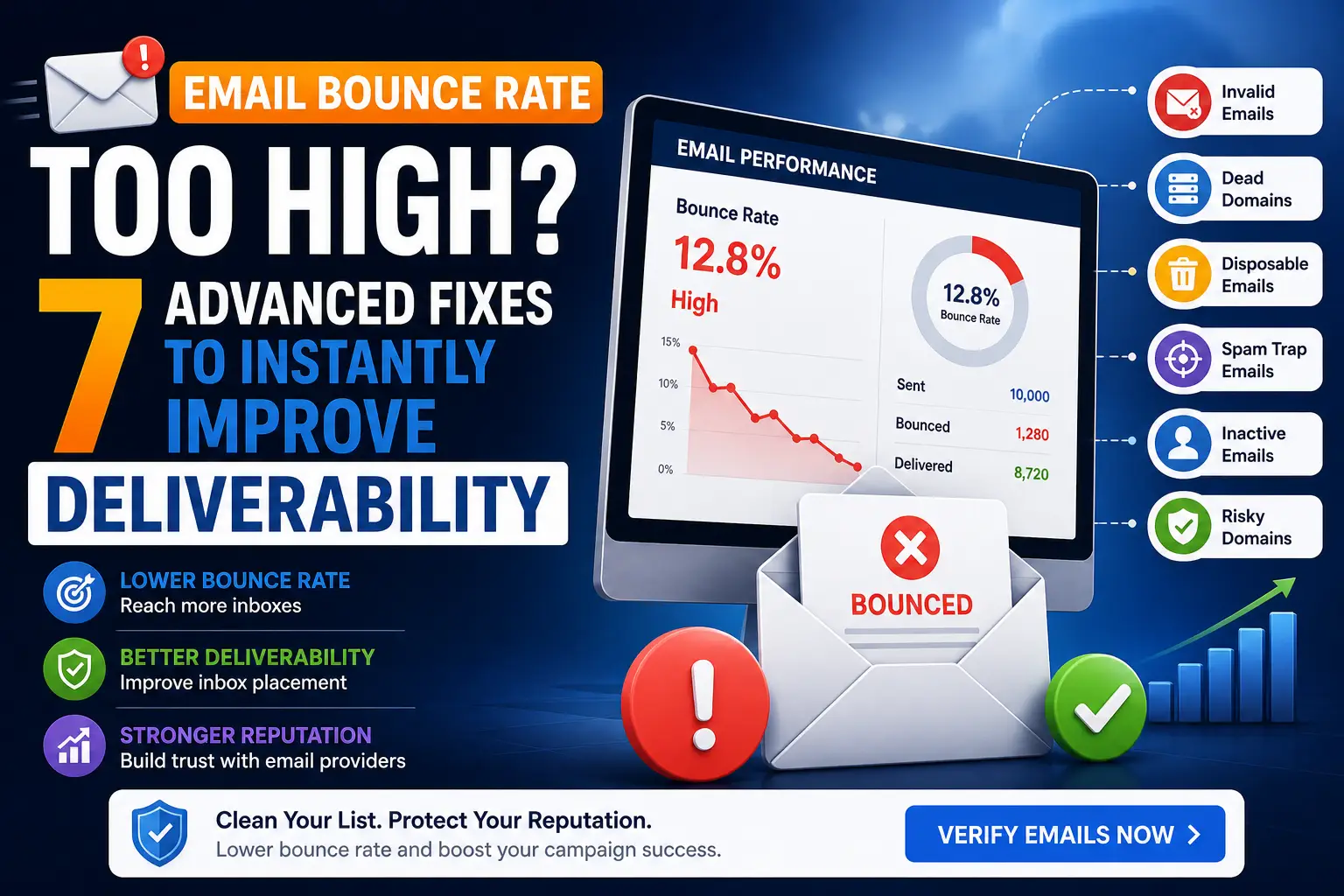
Email Bounce Rate Too High? 7 Advanced Fixes to Instantly Improve Deliverability
Struggling with high email bounce rates? Discover 7 advanced fixes to reduce bounces, improve deliverability, and protect your sender reputation instantly.
Email Deliverability
Email Bounce Rate Too High? Fix It Fast (7 Proven Ways to Improve Deliverability)
A high email bounce rate is one of the biggest hidden killers of email marketing success. If your emails are bouncing, your campaigns are not just failing — they are actively damaging your sender reputation, domain authority, and inbox placement.
Email providers like Gmail, Outlook, and Yahoo monitor bounce rate closely. If too many emails fail to deliver, your future campaigns may be pushed to spam or blocked entirely.
In this complete guide, you’ll learn how to reduce email bounce rate, clean your list, and improve deliverability using proven, real-world strategies.
Read Time: 10 min | Category: Email Deliverability
Before sending campaigns, always verify your emails using a email validator to instantly reduce bounce rate and protect your sender reputation.
What is Email Bounce Rate and Why It Matters
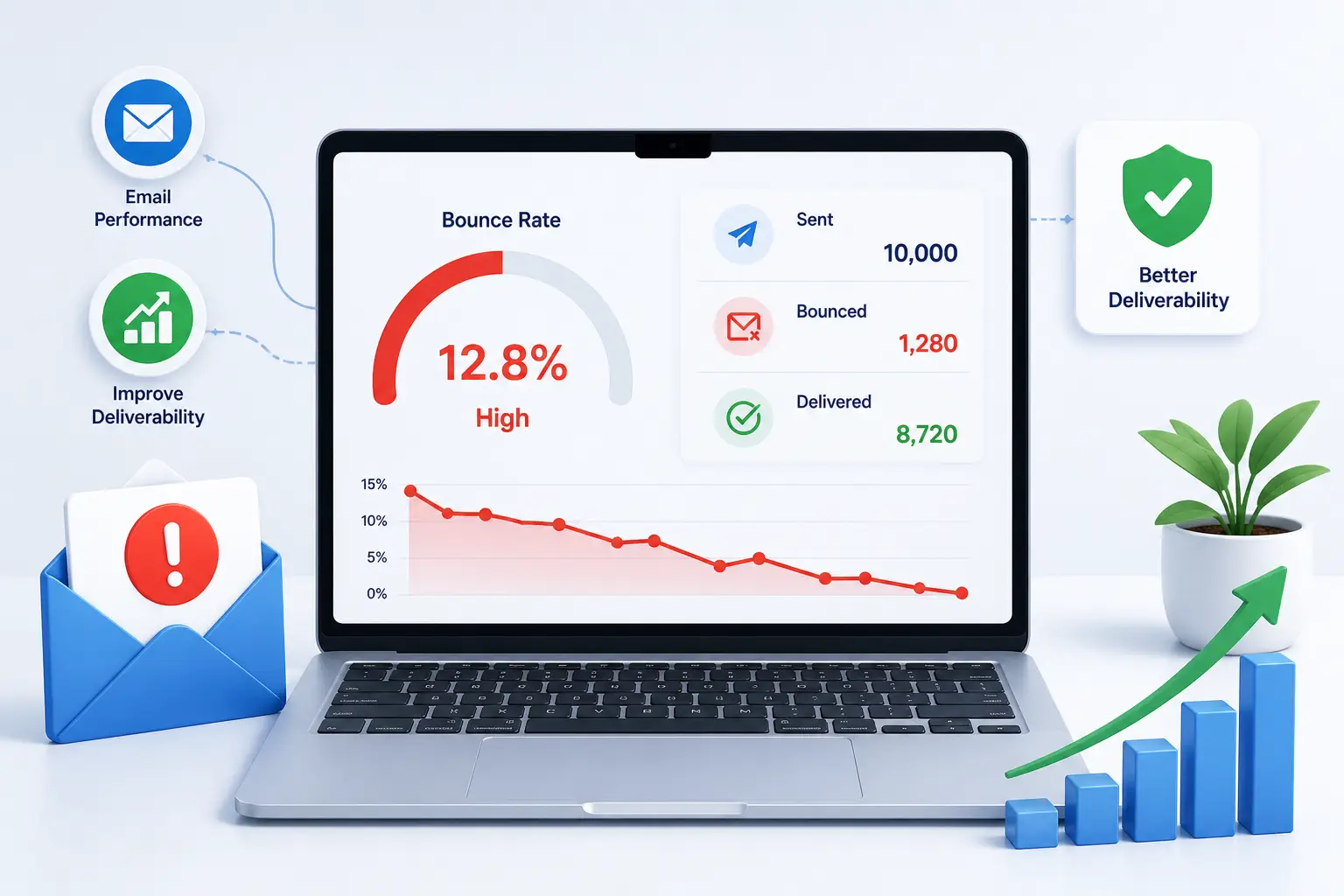
Email bounce rate is the percentage of emails that fail to reach recipients. It is one of the most important metrics in email marketing because it directly affects deliverability, sender reputation, and campaign success.
When your bounce rate increases, mailbox providers start questioning your list quality. A campaign with too many invalid, fake, or inactive addresses signals poor sending behavior. Over time, this can reduce inbox placement even for valid recipients.
- Hard Bounce: Permanent delivery failure caused by invalid email addresses, non-existing domains, or permanently unavailable mailboxes.
- Soft Bounce: Temporary delivery failure caused by full inboxes, server downtime, message size issues, or short-term receiving server problems.
A healthy bounce rate should stay below 2%. Anything higher is a warning sign that your list needs cleaning, verification, and better collection practices.
How Bounce Rate Affects Your Business
Bounce rate is not only a technical email metric. It directly affects your revenue, brand reputation, customer communication, and long-term marketing performance.
- Lower inbox placement across Gmail, Outlook, Yahoo, and business mail servers.
- Reduced domain and sender reputation.
- Higher risk of blacklist placement.
- Lower open rates and click-through rates.
- Higher email marketing cost with lower ROI.
- Difficulty scaling cold outreach or newsletter campaigns.
If your email infrastructure becomes associated with invalid contacts, even your best campaigns may fail. That is why list hygiene must be treated as a core part of your email strategy.
What Causes High Email Bounce Rate?
High email bounce rate usually comes from poor data quality. Many businesses focus on email design, subject lines, and sending time, but ignore the quality of the actual recipient list.
- Invalid or fake email addresses
- Outdated email databases
- Purchased or scraped email lists
- Disposable or temporary email addresses
- Spam traps and blacklisted domains
- Poor email collection methods
- Inactive or abandoned email accounts
- Typing mistakes in signup forms
Most marketers do not realize that the biggest issue is hidden inside their email database. Even a small percentage of invalid emails can hurt campaign performance and reduce inbox visibility.
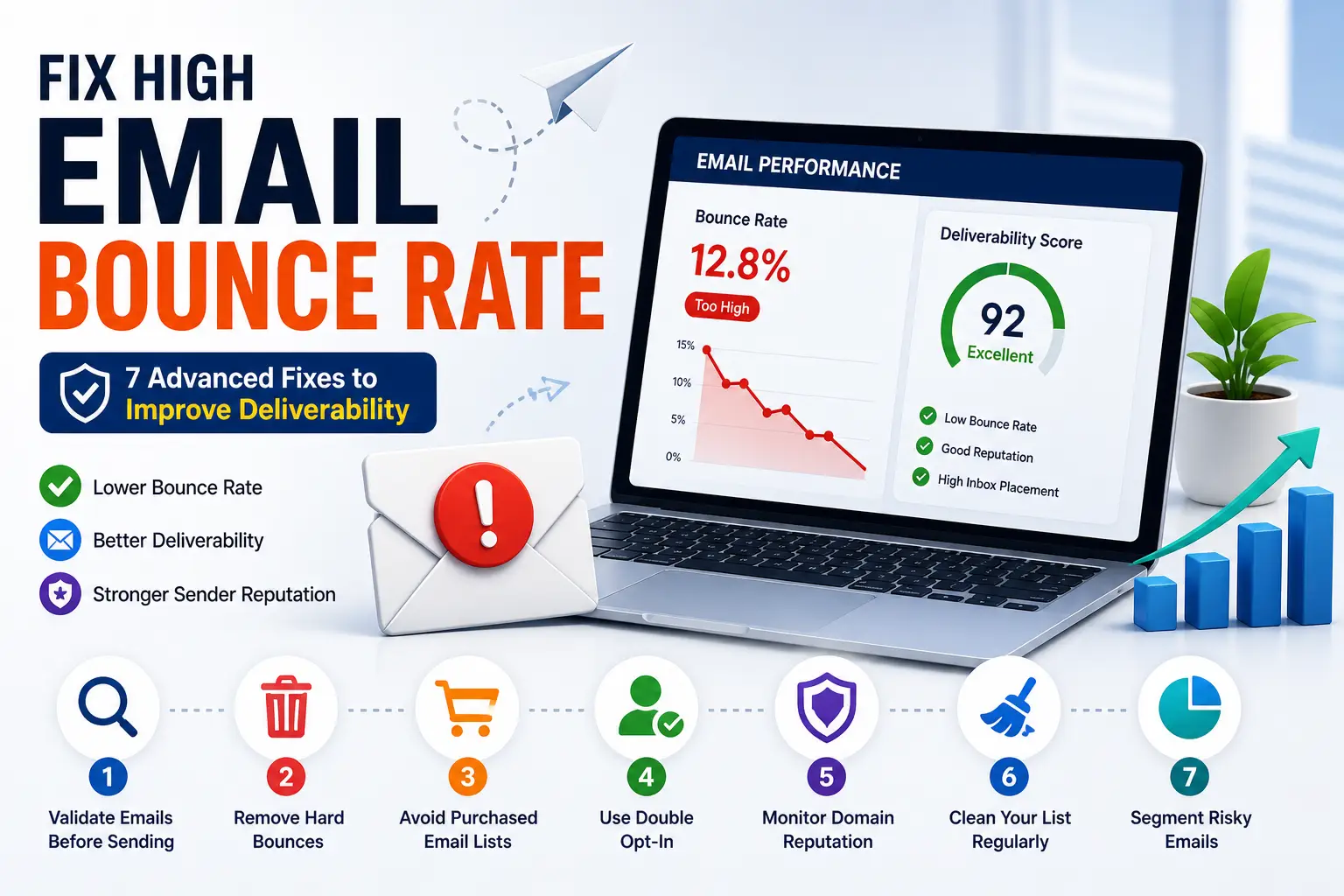
7 Proven Ways to Reduce Email Bounce Rate
1. Validate Emails Before Every Campaign
The fastest way to reduce bounce rate is to validate your email list before sending. Email validation checks whether an address is properly formatted, connected to a real domain, supported by MX records, and likely able to receive emails.
A bulk email verification tool helps remove invalid, disposable, duplicate, and risky emails before they damage your sender reputation.
2. Remove Hard Bounce Emails Immediately
Hard bounce emails should be removed permanently. These addresses cannot receive your messages, and retrying them repeatedly sends a negative signal to mailbox providers.
Create a suppression list for hard bounced contacts so they are never added back into your active campaigns by mistake.
3. Avoid Buying Email Lists
Purchased lists are one of the biggest causes of high bounce rates. These lists often contain outdated contacts, fake addresses, spam traps, and people who never agreed to receive your emails.
Instead of buying lists, build your audience through opt-in forms, lead magnets, webinars, gated resources, and genuine customer interest.
4. Use a Double Opt-In System
Double opt-in confirms that a user owns the email address they submitted. After signup, the user receives a confirmation email and must click a link to join your list.
This process reduces fake signups, typing mistakes, bot submissions, and low-quality contacts.
5. Monitor Sender Reputation Regularly
Sender reputation determines how mailbox providers treat your emails. A poor reputation can push your emails into spam even when your content is legitimate.
Monitor bounce rate, spam complaints, blacklist status, domain health, and engagement metrics after every campaign.
6. Clean Your Email List Regularly
Email data naturally decays over time. People change jobs, abandon inboxes, delete accounts, or switch providers. That means a list that was clean six months ago may no longer be safe today.
For best results, clean high-volume lists before every campaign and validate inactive contacts before re-engagement emails.
7. Segment Risky and Low-Quality Emails
Not every risky email needs to be deleted immediately. Some contacts may be valid but low confidence. Segment these emails separately and avoid sending important campaigns to them.
Use clean, verified contacts for your main campaigns and keep risky addresses out of high-priority sends.
Hard Bounce vs Soft Bounce: What Should You Do?
Understanding the difference between hard bounce and soft bounce helps you decide whether to remove, retry, or monitor an email address.
- Hard bounce: Remove immediately and add to suppression list.
- Soft bounce: Retry later, but remove if it happens repeatedly.
- Risky email: Segment and send carefully.
- Disposable email: Avoid using for serious campaigns.
A smart bounce management process helps protect both your current campaign and future deliverability.
What Happens If You Ignore Bounce Rate?
- Your emails start landing in spam folders.
- Your domain may get blacklisted.
- Your sender reputation drops over time.
- Your open rates and reply rates decrease.
- Your marketing ROI becomes weaker.
- Your future campaigns become harder to deliver.
Ignoring bounce rate is expensive. It does not only affect one campaign — it can damage your entire email marketing infrastructure.
The Smart Way to Fix Bounce Rate Instantly
Manual email cleaning is slow, risky, and difficult to scale. The smarter approach is to use an automated email validation system that checks your entire list before you send.
- Detect invalid emails instantly
- Remove risky contacts automatically
- Find duplicate addresses
- Identify disposable emails
- Improve deliverability
- Protect sender reputation
With NexMailPro, you can check single emails or clean large email lists before launching your campaigns.
Fix Your Bounce Rate Before It Damages Your Campaigns
Validate your email list, reduce bounce rates, and ensure your campaigns reach real users.
Verify Emails NowFinal Thoughts
Reducing email bounce rate is not optional — it is essential for long-term email marketing success. A clean email list leads to better deliverability, stronger engagement, and higher ROI.
Start by validating your email data, removing risky contacts, and maintaining list hygiene regularly. Small improvements in list quality can create major improvements in campaign performance.
Frequently Asked Questions
What is a good email bounce rate?
A good email bounce rate should stay below 2%. If your bounce rate goes above this level, you should clean and verify your email list before sending more campaigns.
How can I reduce bounce rate quickly?
The fastest way to reduce bounce rate is to use an email validator before sending campaigns. It helps remove invalid, risky, disposable, and low-quality addresses.
Does bounce rate affect email deliverability?
Yes. High bounce rates damage sender reputation, reduce inbox placement, and increase the chance of emails landing in spam.
Should I remove soft bounce emails?
Soft bounce emails can be retried, but repeated soft bounces should be removed or segmented to protect deliverability.
How often should I clean my email list?
Clean your email list before every major campaign. For active marketing teams, monthly or campaign-based verification is recommended.